Tuesday, 9 April 2013

Infotention


This weeks lecture focused on the combined concept of information and attention- ‘infotention’.  The term is used to describe the “psycho-social-techno skill/tools we all need to find our way online today, a mind-machine combination of brain-powered attention skills with computer-powered information filters” (Howard 2009). Simply put this means we have the ability to seek tiny parts of information in a huge online space.

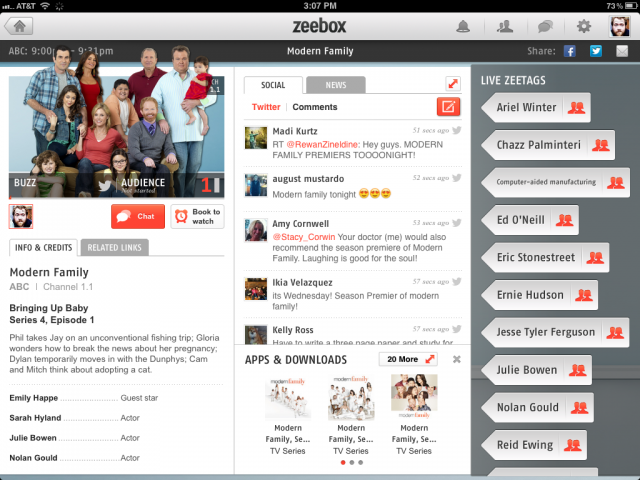
This is also known as a world of flow; we live in a world where information is everywhere (Guilhard 2010). Sociologist Danah Boyd, “suggests that you’re living in the stream: adding to it, consuming it, redirecting it.” This means that we are no longer just passive consumers of media, taking in the information fed to us via print and broadcast media. Today, we can actively engage with the media content. We can comment on a news-story or YouTube video if we think it is offensive or attention worthy, we can even tweet and ‘tag’ opinions we have while watching a TV show. Zeebox is the main program for that.


We can see this in the social media site Twitter, or Tumblr, where you can re-post things and tag things you are interested in or think other people should be interested in. My 12 year old cousin has a Tumblr page about Pastel colours. Every time a #pastelcolour is tagged in a picture it gets posted to her ‘wall’. She has (technically) created a way in which she can effectively find information about pastel colours from all around the world. Her attention is therefore more focused on pastel colours.

There is a ‘pseudo-evolution’ of the mind whereby attention spans are dropping whilst our ability to absorb quick snippets of information increases (Cooke 2005) The newly created iPhone app ‘Summly’ created by Nick D’Aloisio is a development of this idea as it summarises the content of a webpage in to a few words. The implication of absorbing small amounts of information quickly has further been developed in televisions, which can display news headlines via voice recognition. It could be said these implications of media convergence are making our life increasingly fast pace (Cooke 2005). 

Nick D'Alsiosio, creator of 'Summly'

The ideology of the Internet as a public space is crucial when discussing the issue of The Commons. It would be hypocritical of any internet space to be privatized, the idea of ‘commons’ should be embraced in a free, democratic society. 

Tuesday, 2 April 2013

Archive Fever


Archiving is purely instinctual and inherent to our thought processes as humans. Our ability to devise a sense of order to information and content hinders the term ‘Archive Fever’. Jacques Derrida, a French philosopher, coined the term ‘Archive Fever’ in order to understand the human process of archiving, and pur need to archive things.

Derrida argues that “The technical structure of the archiving archive also determines the structure of the archivable content…archivization produces as much as it records the event”. – (Derrida 1997, Stokes 2003, Enszer 2008).

But what is archiving? Archiving to me is how we keep and store memories and data. When I think of an archive I think of a storage warehouse full of paper files. When I think about archiving in broader terms, the thoughts are endless. There is digital vs physical archives, historical archives, ‘invisible’ archives such as your thoughts, and probably so many more I’m forgetting.

Facebook, earlier this year it introduced ‘Timeline’ which meant that you could backtrack through every Facebook wallpost, status and photo you had been involved with. For some (including me) this was highly embarrassing as I had all these geeky, weird Facebook statuses from when I was 15 that I thought were funny at the time, and they were now on public display for everyone to see (including people I’d met from the age of 20 that I thought would never have to see me at age 15). Why do we have the constant need to archive everything?


I am in 2 minds with social media, sometimes I feel like it makes us live in the moment more, but others I feel like it makes us fall out of the moment. I mean, isn’t having the memory in your mind enough?

Derrida outlines the importance of ‘authority’ that the archives possess and that they hold the power as to which data is publicly available, which are hidden and which are destroyed.

This made sense, its who posts things an archive, not what.

Those who create archives and input data have control over what is recorded, preserved, destroyed, and what can or can’t be accessed. As such, you could consider what the data was like before it was put in the archive, and how it may affect how you engage with it.

Monday, 1 April 2013

ASSEMBLAGE


Beginning to write this blog about assemblage, the one thing that kept crossing my mind is how much it relates to everything, not just publishing. When I try to explain assemblage to myself, I think of a car. If you break down, you call the NRMA. They might say your engine is broken. Then they have to look at all the parts of the engine and see which one needs replacing. Then you need the part of the engine to make your car run again.
There are so many ‘actants’ that are needed to fix your car, both human and non human. That’s what makes an assemblage.
Although it is called a “theory”, Actor Network Theory (ANT) does not usually explain “why” or "how" a network takes the form that it does. Rather, ANT is a way of thoroughly exploring the relational ties within a network (which can be a multitude of different things). As Latour notes "explanation does not follow from description; it is description taken that much further." It is not, in other words, a theory "of" anything, but rather a method, or a "how-to book" as Latour puts it.

In the tutorial this week we conducted a task I found very interesting and really got me thinking about the intricate relationships in an assemblage. Our group looked at Apps’ for iPhones, iPads, Androids etc. We listed all the actants we thought needed to build and application:


Designers,
Design software
Apple Inc.
Samsung
Android
Google,
Credit Card (money),
Backflip or any large app production companies
Facebook,
iPhone,
Agencies
Hosting companies
Advertisers 

Im sure the list goes on!
We concluded that the Macro assemblages would be the production agencies such as Backflip, and the Micro assemblages would be things such as code and colour.

We then asked ourselves some questions about apps and how they’ve changed society. Well I guess the simple answer to that is it’s made us lazier. I mean, who needs to go to the bank now? Not me. I’ve got my app. Who needs to play soccer outside when you can play soccer on a game app? The list is endless.

Here’s a scene from the movie ‘Friends with Benefits’ that came to mind. 


It’s interesting to look at how the assemblage of apps changed the relationships between the actants. Apple was the original territorial owner of apps, and iPhone dominated the market. Now we can see that Samsung, it’s main competitor is a large part of the assemblage too. And as consumers, we are completely excluded from the development process, but we are the ones who demand it! Crazy!

What would we do without people to write codes, computers to implement codes, software to develop the app, advertisers to invest in the app, agencies to sell the app, and then Apple or Samsung to buy the app? It’s a mouthful, and that’s just the app assemblage in a very small nut shell. 

Monday, 25 March 2013

Alphabet


This week’s lecture about publishing blew my mind. Who would have thought? Considering how much information we have access to, it’s always amazing when someone gives you brand new information that you had never thought of (and never thought you would). Publishing isn’t just the idea of a giant printing press producing newspapers and books. It “is the process of production and dissemination of literature, music, or information — the activity of making information available to the general public” (Harper 2004). Wow! This definition doesn’t even do it justice. Publishing is everything; it’s how we look at each other, our facial expressions, our alphabet, our voice, our alarms, our image. To me, publishing is how we communicate to others who we are as individuals. 

Let us look at Andrew’s example of monkeys. Have you ever looked at a Monkey and wondered what it’s thinking? I hadn’t, until I thought back to my recent trip to the Monkey Forest in Ubud, Bali. These monkeys were cheeky, sneaky, angry, rowdy, sleepy, you name it. How could I know this? Facial expressions, and sounds. At 7pm everyday the sanctuary would close and people would be asked to leave as it was feeding time for the monkeys. At about 6:45 when the Banana trucks were approaching, you could hear the screeching of monkeys from a million miles away. When the bananas were distributed, you could see how excited the monkeys were, almost smiling. When the alpha male monkey came for his feed, the facial expressions of all the other monkeys changed to a look of fear. Coming off a tangent now, we can see how monkeys can publish their thoughts even though they don’t have an alphabet.

Visual expression has come to be one of the most important ways of publishing today. Looking back, it was really the most important (and only) way to begin with. Visual expressions such as smoke signals, cave paintings, hieroglyphics and Aboriginal art were all used as a way of communicating through time. However these expressions and structures could not be transported through space. That’s when we genius humans came up with an idea…AN ALPHABET!
Having an alphabet can be compared to a time machine, right? Assuming we never change the alphabet, we will always be able to communicate through time, and learn from our mistakes. And now with digital publishing, we can keep these ideas forever. The alphabet equals infinity. Will we ever run out of things to write down?

Going back to visual expression, I think history is repeating itself. Instagram, tumblr, flickr are so incredibly prominent in today’s society. It’s not enough to go to a nice restaurant and have a nice meal with a companion. You have to take a picture of your meal, instagram it, tag you and your friend and anyone else you think would be interested. Once people see the photo, they know you are social, you went to a nice place and what you ate for dinner. What’s strange about this situation? No words needed!

A PICTURE TELLS A THOUSAND WORDS.

To support my point, observe this madness in the below picture. 


This can work for any situation; you’re in a natural disaster? Take a picture to warn people or show you’re scared. There’s traffic on the bridge? Take a picture to display your frustration. You just saw a beautiful sunrise? Take a picture to display your happiness.


I question why this has occurred, do we want reassurance that our emotions are rational? Or are we becoming so antisocial that we no longer have to use words to communicate with each other. Maybe we’re just lazy, OR is using images just the simplest and easiest way of communicating? Our monkey friends seem to think so. 

e-Readers